
First, notice
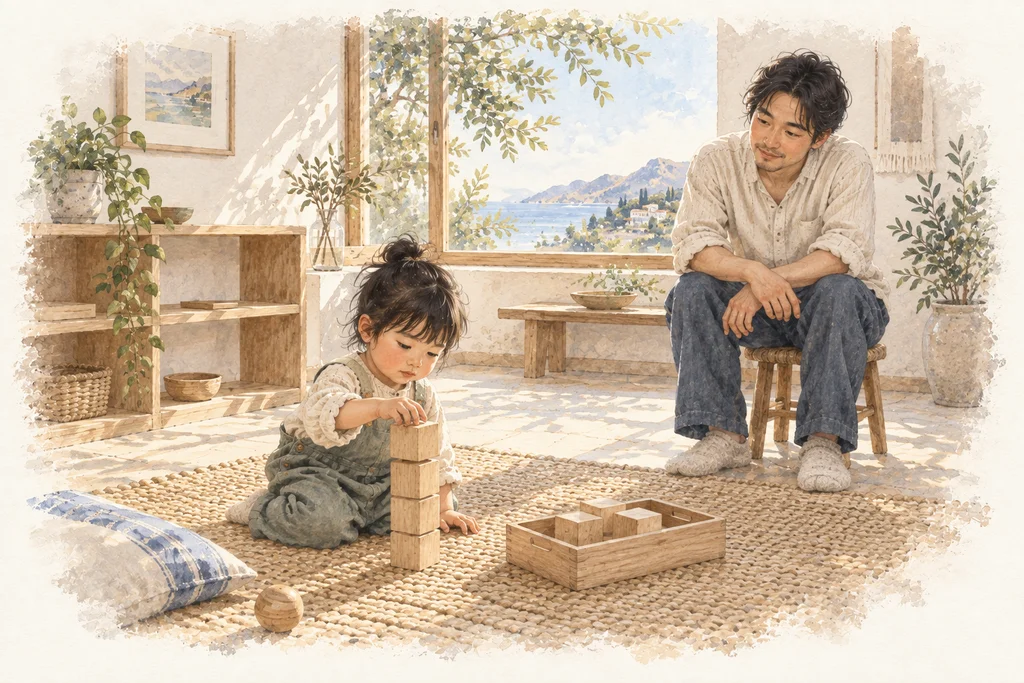
Record what your child did, how they tried and what held their attention. Begin with facts and hold back judgement.
Understanding a child does not begin with a standard answer. It begins with a glance, a moment of concentration, an invitation to try again.
Five themes to help you notice everyday discoveries. Choose one and find an idea for a thoughtful response.
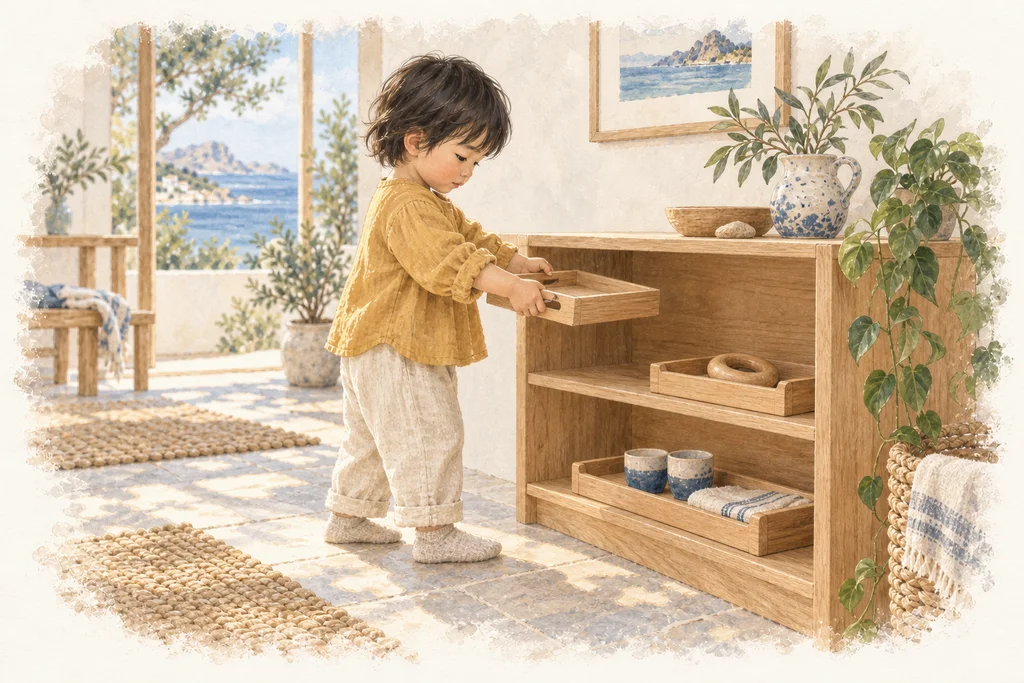
Familiar sequences help a child make sense of their surroundings. Notice preferences for places, routines and repetition.
Give everyday objects a consistent place. Include your child in taking out, using and returning them.
These themes organise observations; they are not an age timetable or developmental assessment. Interests and rhythms differ.
Record what your child did, how they tried and what held their attention. Begin with facts and hold back judgement.
Bring moments from different days together. Tools can organise the notes; understanding comes from continued observation.
Make a small change to the environment or offer a suitable material. Demonstrate slowly, then give space.
Follow today’s curiosity toward a new place to begin.
Find a place to beginABOUT 2 MINUTES · NO SIGN-UP