
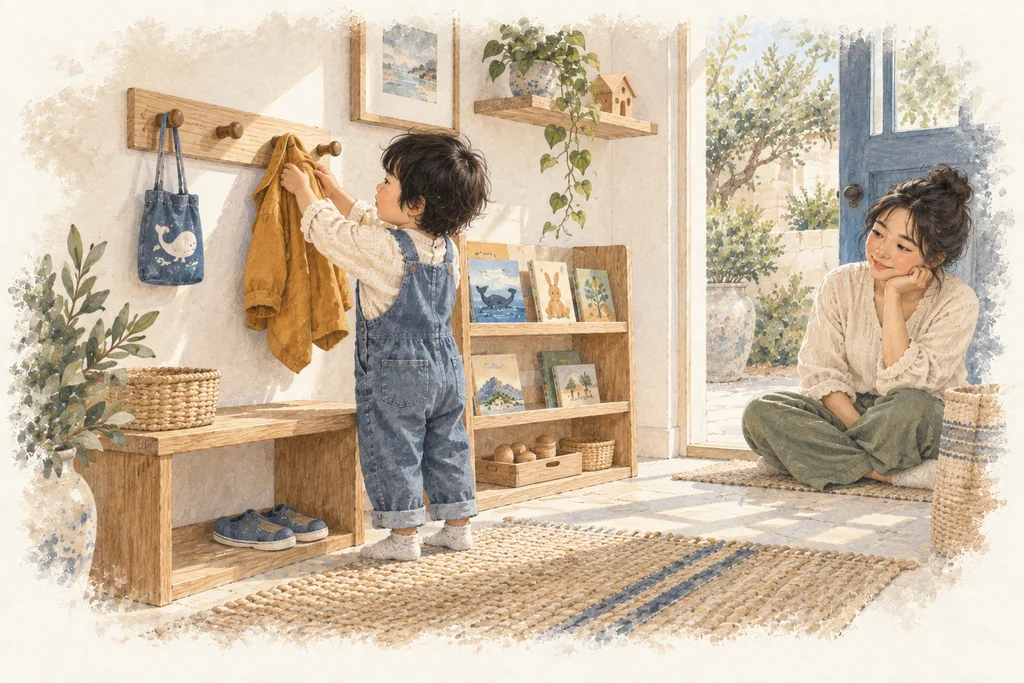
Start at your child’s eye level
Sit where your child spends time and notice what they can see, reach and return. A hook that is too high, a heavy jug or too many choices can turn an independent attempt into a request for help. Begin with one everyday space.
Fewer materials. Clearer choices.
Keep a small selection of materials that match current interests on a low, open shelf. Give each activity a complete place, perhaps a tray or basket. A limited choice can make the environment easier to understand than a stream of new toys.
- Complete: keep everything needed for an activity together.
- Accessible: easy to take out and return independently.
- Consistent: keep positions stable and involve your child in changes.
Let everyday life be the activity
Wiping a table, sorting socks and watering a plant are meaningful ways to participate. Choose one daily task, prepare manageable tools, demonstrate slowly and leave time to try. Cleaning up a spill belongs to the activity too.
Safety is part of preparation
Follow age guidance and product instructions. Use intact materials, avoid choking hazards, secure furniture that could tip and keep dangerous items out of reach. Stay with your child during activities involving water, food or tools.
A checklist for today
0 / 5One small preparation at a time.
Checks stay on this page only and clear when you refresh.
You don’t need to do everything at once. One small change today deserves to be noticed.
Explore more field notes