
Along the parenting journey,
a little company.
Share a discovery. Listen to a question. Other perspectives can bring new ways to understand a child and a little more ease for yourself.
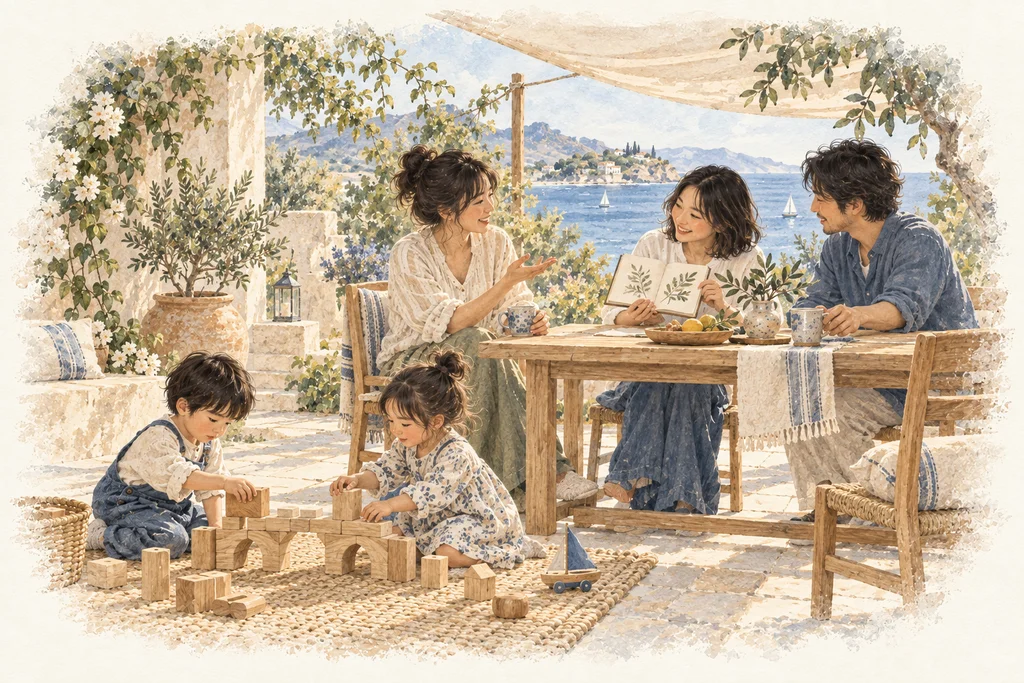
Let’s talk about
the little everyday things.
Start with a question from everyday life. Make a conversation useful and an idea possible to try.
A home that says “I can.”
You don’t need to turn your home into a classroom. A low shelf and a small work mat can make room for independence.
Understanding “again, again.”
Repeated pouring, the same walking route, endless questions about a word. Repetition can offer clues to a child’s current interests.
Take curiosity outside
You don’t need to go far. A leaf or a moving shadow just outside can become a small world to explore.
Bring a question.
Leave with an idea.
A concrete observation is often more useful than a broad judgement when talking with family or educators. These three questions can help you begin.
Take an observation guideWhat has your child chosen recently?
What invites them to try again and again?
What could we prepare for the next discovery?
A little more understanding.
Can I begin without Montessori experience?
Yes. Begin by noticing one interest and making one small change in everyday life. The home checklist and observation guide offer practical starting points.
Does the exploration guide score my child?
No. It matches your choices of age, interest and setting with editorial activity ideas. It does not score abilities or assess development.
Do I need to buy materials to begin?
No. Many discoveries begin with suitable, safe everyday objects. Understand your child’s interest before considering additional materials.
Where can I find community events?
Confirmed events and contact channels will be shared here. For now, explore our reading topics and download an observation guide for your next conversation.
Growth has its own rhythm.
Let’s take time to notice.
Follow today’s curiosity toward a new place to begin.
Find a place to beginABOUT 2 MINUTES · NO SIGN-UP