
Choose a short, familiar route
Leave time to stop. Check the surface, weather and surroundings, and choose a manageable route. Stay nearby; independent exploration does not mean going alone.
Follow one small discovery
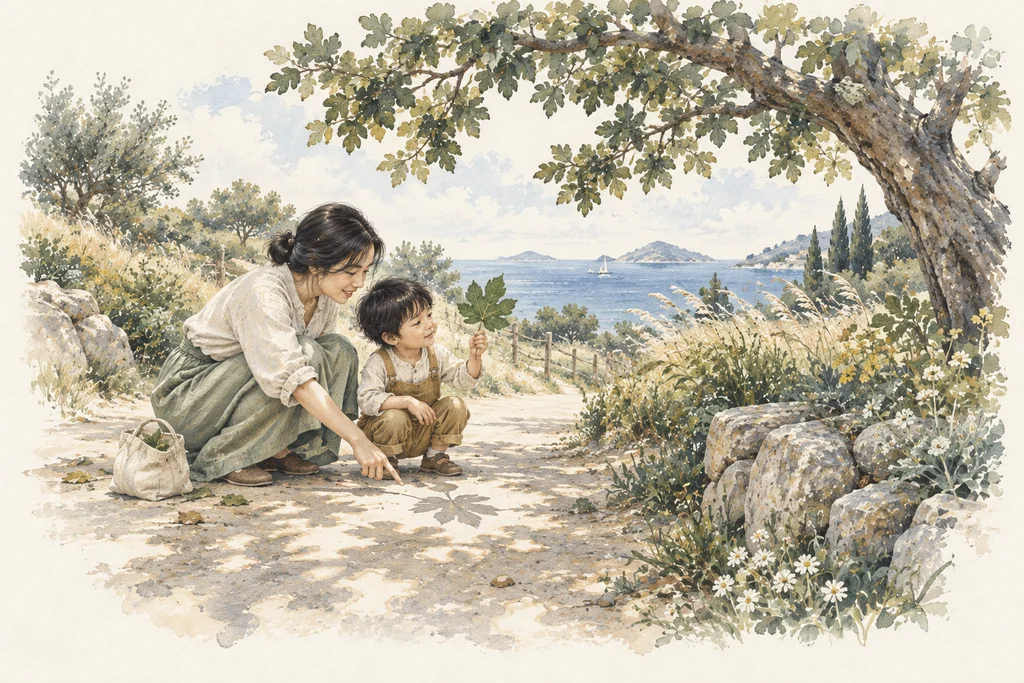
When your child stops, pause too. Look at a leaf’s edges, listen for sounds from different directions or watch a shadow move. Let your child describe a discovery before adding yours.
- What colours and shapes can I see?
- Where is that sound coming from?
- What is different from our last visit?
Bring a discovery into daily life
Afterwards, keep a moment through drawing or storytelling. A walk does not need to become an assignment, and unfamiliar plants or animals can stay where they are. Putting your phone away and listening is already meaningful company.
A checklist for today
0 / 5One small preparation at a time.
Checks stay on this page only and clear when you refresh.
QUAWHALE / FIELD NOTES
You don’t need to do everything at once. One small change today deserves to be noticed.
Explore more field notes